
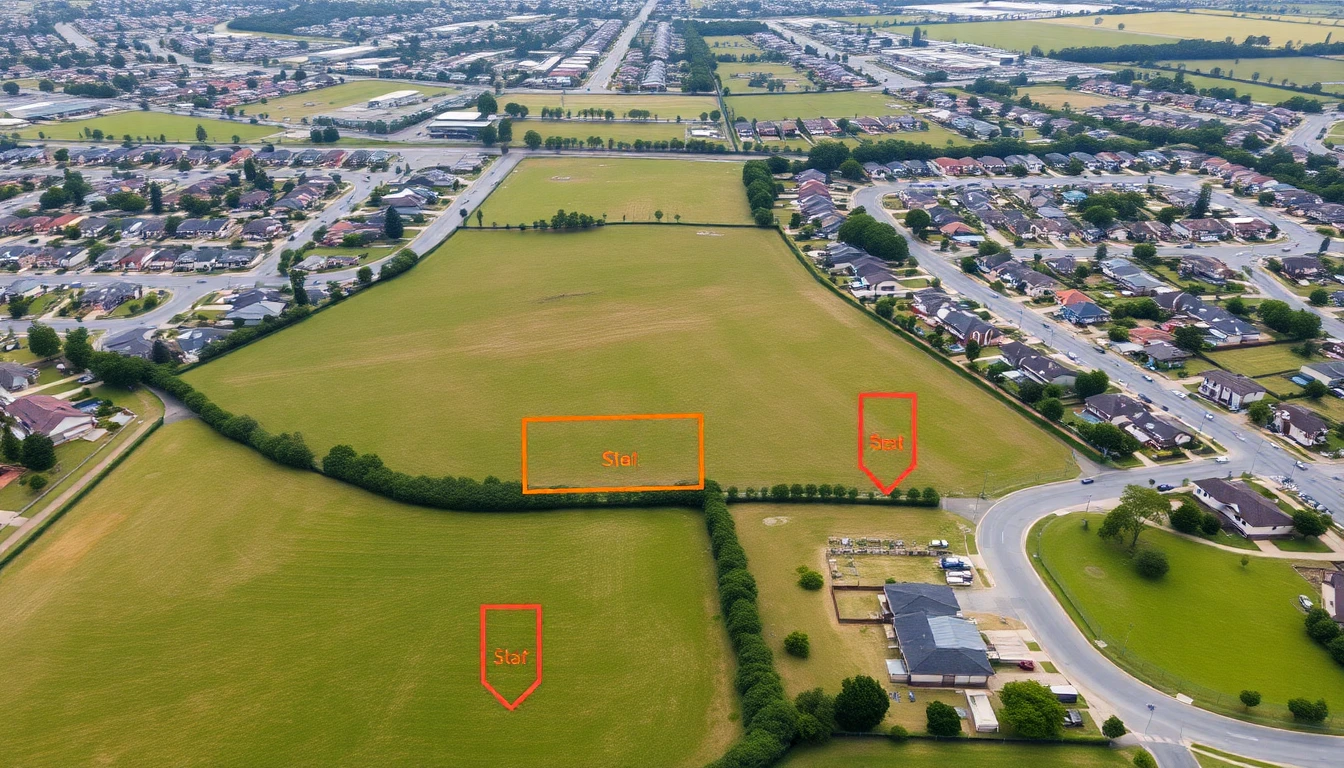
Subdividing property in Brisbane can significantly increase the value of your land, depending on location, lot size, and zoning. But it's a complex process involving surveys, council approvals, infrastructure requirements, and legal documentation.
This 2026 guide covers everything you need to know about subdivision in Brisbane - from feasibility to final registration.
Can Your Brisbane Property Be Subdivided?
Not every property can be subdivided. The first step is checking feasibility, which depends on:
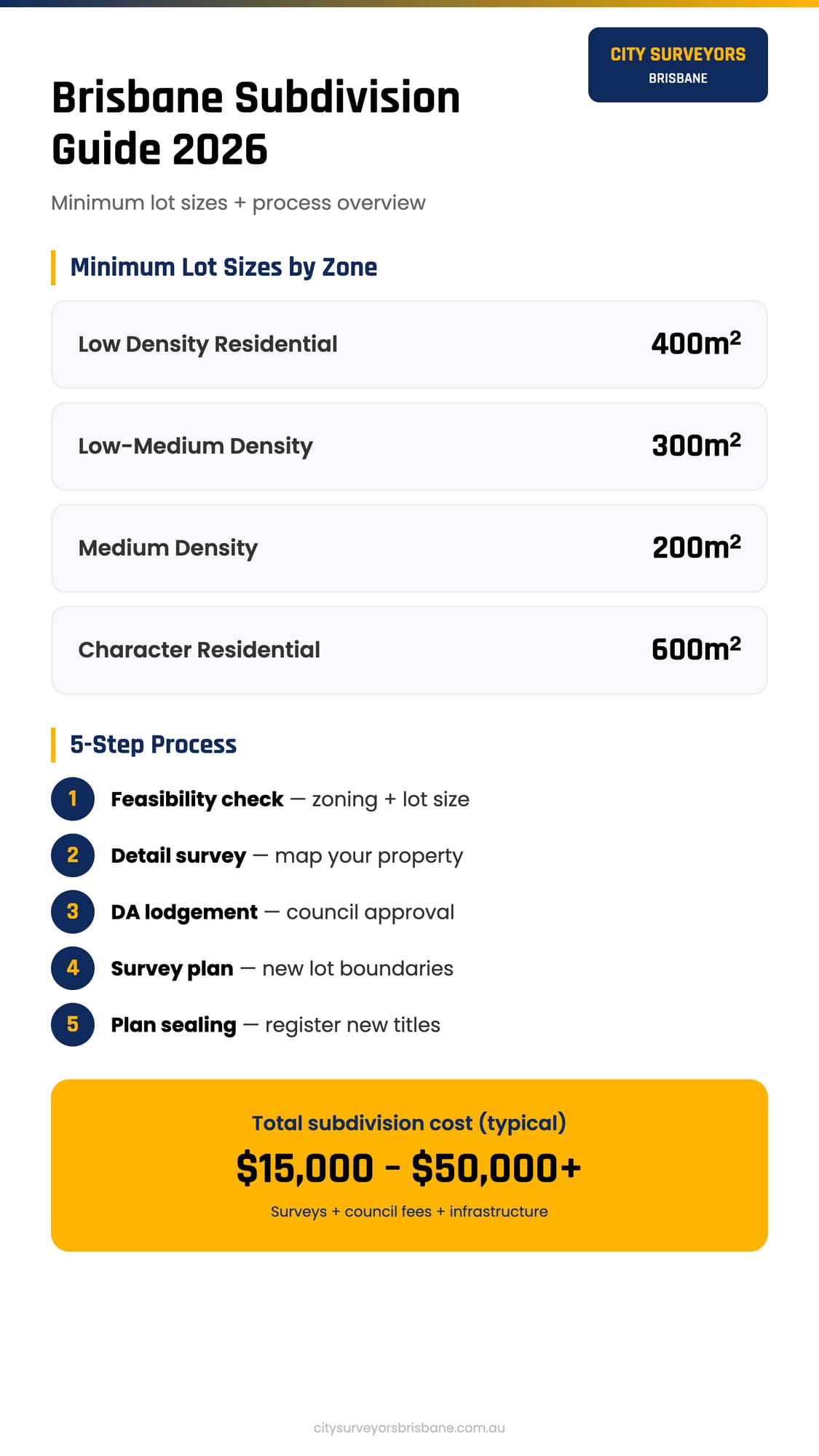
- Zoning: Your property's zone under the Brisbane City Plan determines minimum lot sizes (Low Density Residential typically requires 400m²; Low-Medium Density allows smaller lots)
- Current lot size: You need enough land to create lots that meet minimum size AND frontage requirements
- Frontage: Each new lot needs adequate road frontage (or a right-of-way access)
- Services: Each new lot needs access to water, sewer, electricity, and stormwater
- Overlays: Flood, bushfire, heritage, or character overlays can restrict subdivision potential
Many Brisbane homeowners don't realise their property has subdivision potential. Blocks over 600m² in Low-Medium Density zones are often subdividable. Even blocks as small as 500m² may qualify in some zones.
Step-by-Step Subdivision Process
Step 1: Feasibility Assessment
Before spending money on applications, get a professional assessment. A surveyor or town planner will check:
- Your zoning
- Lot dimensions
- Overlay constraints
- Service availability
At City Surveyors Brisbane, we provide honest feasibility advice - including telling you if subdivision isn't viable for your property.
Step 2: Detail Survey
A detail survey maps your property's features:
- Buildings and structures
- Fences and boundaries
- Trees and vegetation
- Contours and levels
- Drainage systems
- Services and utilities
This forms the base plan for your subdivision layout and is required by your designer and council.
Step 3: Subdivision Design
Working with your surveyor and/or town planner, you'll design the subdivision layout:
- Lot sizes and configurations
- Access arrangements
- Building envelopes
- Infrastructure requirements
This must comply with Brisbane City Plan requirements for your zone.
Step 4: Development Application (DA)
Most subdivisions in Brisbane require a development application to council. This includes:
- Your survey plans
- Subdivision layout
- Stormwater management plan
- Any other reports required by overlays
Council typically takes 2-4 months to assess subdivision applications.
Step 5: Compliance and Infrastructure
After DA approval, you'll need to complete any conditions, which may include:
- Infrastructure works (new driveway, stormwater connections, utility services to new lots)
- Operational works applications
- Compliance certificates
Step 6: Survey Plan Preparation
Your professional surveyor prepares the official survey plan that defines the new lot boundaries. This is a legal document that must meet strict accuracy and documentation requirements set by the Registrar of Titles.
Step 7: Plan Sealing and Registration
Once all conditions are met:
- Your survey plan is sealed by council
- Lodged with Titles Queensland for registration
- New separate titles are issued for each lot
- Your subdivision is complete
Brisbane Suburbs with High Subdivision Potential
Some Brisbane suburbs are particularly well-suited for subdivision due to their zoning, lot sizes, and land values:
South side:
- Sunnybank
- Wishart
- Upper Mt Gravatt
- Carindale
- Mansfield
North side:
- Chermside
- Stafford
- Kedron
- Nundah
- Aspley
East side:
- Wynnum
- Manly
- Capalaba
- Wakerley
West side:
- Kenmore
- Chapel Hill
- Indooroopilly
- Graceville
Common Subdivision Mistakes to Avoid
- Not checking feasibility first: Don't assume your block can be subdivided - check zoning and overlays before committing money
- Underestimating costs: Infrastructure charges and council conditions can significantly increase costs beyond initial estimates
- Ignoring stormwater: Brisbane council takes stormwater management seriously - inadequate drainage is a common reason for DA refusal
- Not engaging a surveyor early: A surveyor should be your first call - we can assess feasibility and guide the entire process
- DIY town planning: Subdivision applications are complex - professional help saves time and avoids costly mistakes
How Long Does Subdivision Take in Brisbane?
A typical timeline for a straightforward 2-lot subdivision:
- Feasibility + survey: 2-4 weeks
- DA preparation + lodgement: 2-4 weeks
- Council assessment: 2-4 months
- Compliance + infrastructure: 1-3 months
- Plan sealing + registration: 2-4 weeks
- Total: 6-12 months from start to separate titles
Ready to Explore Subdivision?
The first step is a feasibility assessment. Contact City Surveyors Brisbane or call (07) 3477 9914 to discuss your property.
We'll give you honest advice on whether subdivision is viable and what it would cost - no obligation.